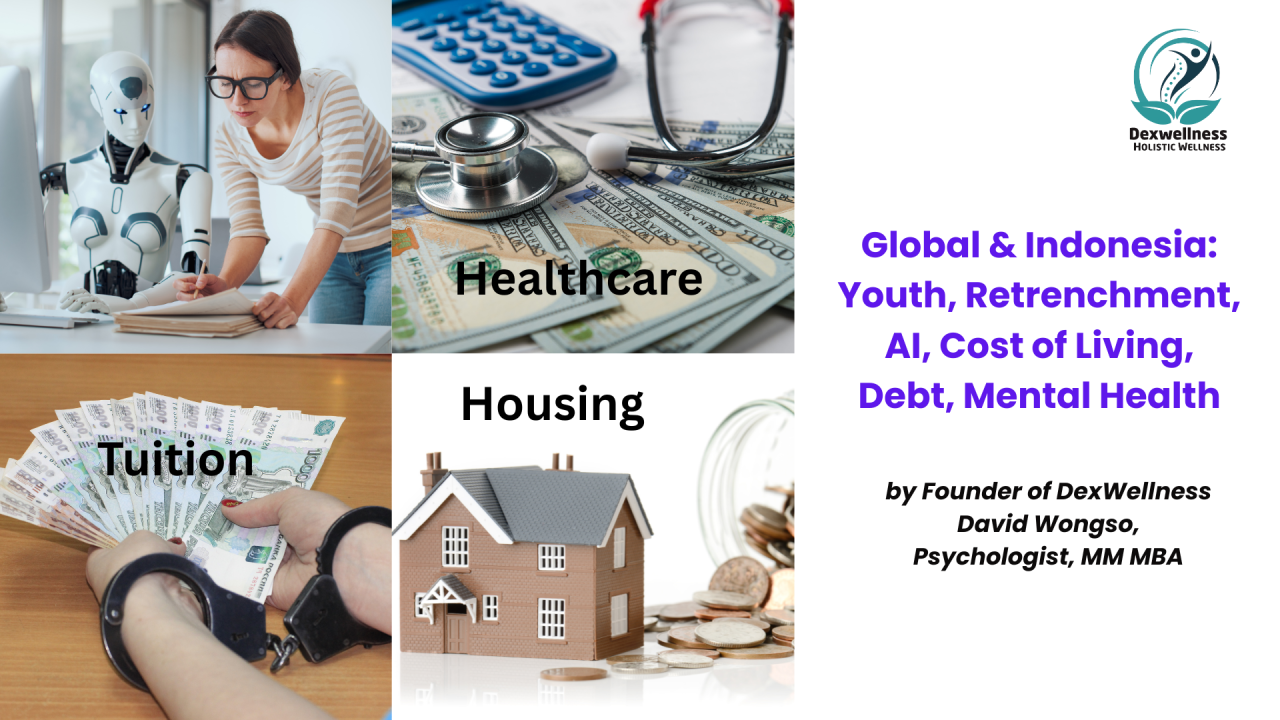
“Around the world — and in Indonesia — the dreams of the young and the dignity of families are at risk.”
Escalating education costs, job market disruptions from automation, and inadequate mental health support are interconnected crises threatening economic stability and family wellbeing. This article examines how these forces converge — and what policymakers, corporate leaders, and civil society must do to respond.
Educational Costs, Debt & Family Sacrifice
Families are depleting savings and accumulating debt to afford university education. Even after graduation, employment challenges create precarious financial situations. Student debt delays major life decisions including homeownership, marriage, and entrepreneurial ventures.
Middle-class families allocate most household income to housing, education, and healthcare — leaving little room for financial resilience when disruptions hit.
Unemployment, Retrenchment & Job Market Mismatch
Technological disruption threatens middle-skilled positions in manufacturing, banking, and administrative sectors. Manufacturing sectors show “regressive or negative labor absorption dynamics” — meaning automation is displacing workers faster than new roles are being created.
Retrenched workers lose not only income but also health insurance, severance payments, and social security contributions. Graduates face significant employment barriers despite qualifications, creating a generation burdened by education debt without the income to repay it.
Mental Health, Social Strain & Support Gaps
Indonesia faces significant treatment gaps, with mental health under-prioritised in policy and budgets. Provider shortages and persistent stigma limit service accessibility.
Low income and rural residence correlate with elevated mental health risk. Current WHO projections may underestimate the psychological toll of AI-driven disruption, since historical models predate the era of accelerated automation.
“This is not only an economic issue — it is a mental health crisis, a social stability risk, and a generational turning point.”
Access to Credit, Entrepreneurship & Social Safety Nets
Indonesia lacks comprehensive unemployment insurance. Many workers — particularly informal sector employees — lose social security coverage during job transitions. The absence of robust safety nets increases vulnerability and discourages entrepreneurial risk-taking.
Strategic Implications
For Policymakers
- Restructure higher education financing to reduce family savings dependence
- Establish robust unemployment insurance and portable benefits systems
- Invest in future-focused sectors: green jobs, digital economy, SMEs
For Corporate Leaders
- Implement workforce reskilling as strategic investment
- Adopt ISO 45003 psychosocial risk management standards
- Expand employee mental health support
- Collaborate with universities on curriculum alignment and apprenticeship pathways
For Civil Society
- Build mentorship networks and peer counselling services
- Create advocacy platforms supporting young jobseekers
- Ensure equitable policy implementation
Mental Health & Social Support Actions
- Expand Community Services: Scale tele-counselling, digital platforms, and peer support networks through NGOs, religious institutions, and youth organisations
- Integrate Mental Health into Programs: Embed stress management and resilience training in job training centres and universities
- Reduce Stigma: Launch public awareness campaigns leveraging youth voices and social media; train community gatekeepers
- Coordinate Cross-Sector Support: Link mental health services with employment support, social protection programs, and community resources. Implement automatic psychosocial counselling referrals for displaced workers
Closing Reflection
Without intervention, Indonesia’s demographic advantages could transform into demographic liabilities — with educated youth facing persistent unemployment and households fractured by economic despair.
“This is not only an economic issue — it is a mental health crisis, a social stability risk, and a generational turning point.”