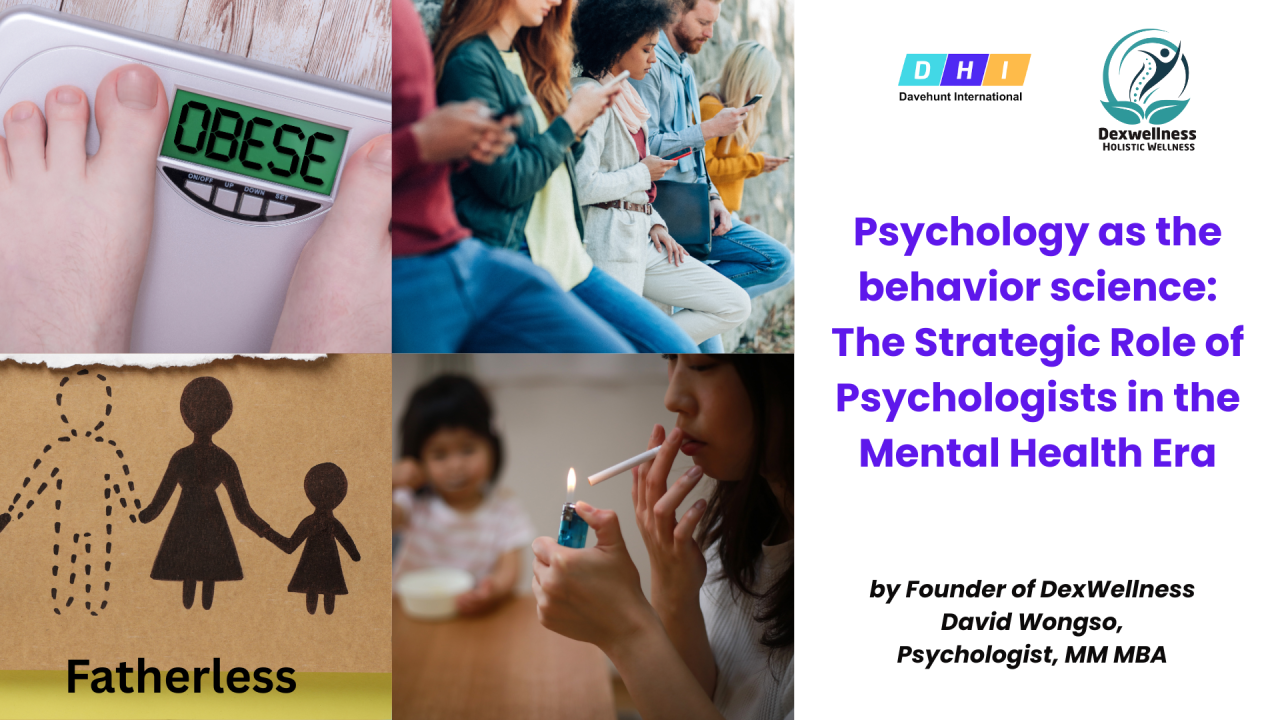
The 2025 World Mental Health Day reminds us that mental health is not merely an individual concern — it can be the foundation of national progress. Psychologists stand at the frontline of this era. Psychology is not only the science of healing those who are hurt, but is the science of behavior, capable of preventing, guiding, and shaping societies toward a healthier behavior and more resilient future.
Indonesia’s 10 National Challenges
Indonesia faces 10 national challenges, all related and rooted in human value, mindset, attitude and behavior:
- Fatherlessness — the absence of fathers leaves psychosocial wounds in the next generation.
- Preventable lifestyle diseases (NCDs) — smoking, junk food, and sedentary habits leading to obesity, stroke, diabetes, cancer, dementia and heart disease.
- Digital & social media addiction — lead to anxiety, lower cognitive ability, draining focus, damaging relationships, and fueling loneliness.
- Predatory lending & financial impulsivity — consumptive behavior, trapping families in financial stress.
- Road safety & transport behaviors — reckless violations causing preventable deaths.
- Corruption & integrity erosion — behaviors that weaken public trust.
- Workplace disengagement & low productivity — undermining competitiveness.
- Collective mental health — depression, self-harm, and suicide still shrouded in stigma.
- Violence, bullying, and social aggression — persisting from classrooms to offices.
- Environmental neglect & climate behavior — low awareness of pollution, sustainability and care for the planet.
“These are not only issues of regulation or resources. They are behavioral challenges.”
Here lies the unique contribution of psychology: to understand why people act as they do, and how behavior can be modified and transformed — with knowledge, empathy, intervention, policy, system and evidence-based programs and strategies.
Psychologists Beyond the Counseling Room
Now imagine psychologists not only in counseling rooms, but also in leadership, policy rooms and boardrooms. Not only listening to individual struggles, but also designing public campaigns to reduce smoking, obesity, digital addiction, or fatherlessness. Imagine psychologists as architects of behavior, shaping schools, workplaces, communities and cities that nurture mental health.
What Other Countries Have Shown Us
- Sweden and Norway pioneered father-specific parental leave policies, granting months of paid leave exclusively to fathers to encourage active involvement from the earliest stages of a child’s life. Supported by generous family benefits and flexible childcare systems, they normalise shared parenting and reduce the stigma around men as primary caregivers. Such interventions strengthen child development outcomes, improve maternal wellbeing, and foster more equitable gender roles in families and workplaces.
- Australia introduced plain cigarette packaging, high tobacco taxes, and nationwide public health campaigns such as Slip, Slop, Slap for skin cancer and the Health Star Rating for healthier food choices. A leader in workplace mental health, with laws mandating psychosocial risk management (aligned with ISO 45003) and initiatives promoting work-life balance and flexible work arrangements.
- South Korea and China established digital detox centres for youth.
- Finland tackled bullying with the KiVa school program.
- Singapore through nudges like the Healthier Choice Symbol on food, the gamified National Steps Challenge, and social norm campaigns such as “Keep Singapore Clean” and the Kindness Movement.
“If they can, why can’t Indonesia?”
The Broader Impact of Psychology
And the truth is: psychologists can influence far beyond the therapy chair. We can consult with ministries to design behaviorally informed policies, work with corporations to build mentally healthy workplaces, and partner with schools and communities to foster resilient future generations. Our science gives us the tools to move upstream — from treating the effects of distress, to preventing and shaping the causes at scale.
In this Mental Health Era, investment in healthy behavior and social integrity is more valuable than building concrete and steel. Psychology must no longer be seen as “complementary” but as a strategic behavioral science for nation-building.
A Call for Action
At this Mental Health Day 2025, this is a reflection and call for action:
- To raise fatherlessness as a national wound.
- To design behavioral interventions for NCDs and digital addiction.
- To be trusted partners for government and business in behavior-based policy.
- To bring psychology to classrooms, workplaces, communities, and public spaces.
Indonesia Emas 2045 will only be realised if its young generation is having strong and caring family. Children have good nutrition, mentally healthy, cognitively capable, resilient, and ethical. That begins with psychologists, to step beyond individual therapy toward collective impact for the nation.
“Today, let us not only celebrate World Mental Health Day, but also commit to this: Psychology as the Behavioral Science that becomes one of the pillars and foundation of Indonesia’s future.”