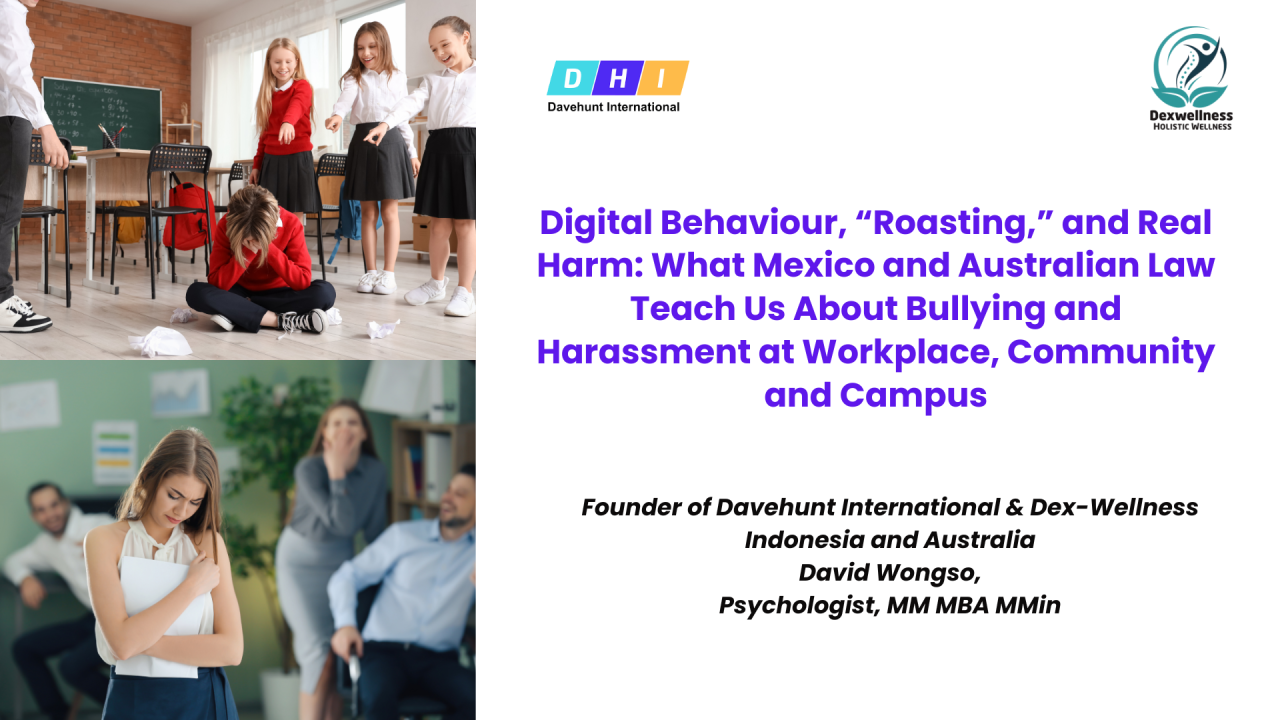
In today's hybrid world, digital behaviour matters as much as physical behaviour. Workplaces, campuses, and community groups increasingly live inside WhatsApp chats, Teams channels, Slack threads, Discord servers, and group DMs. These spaces can build community — but they can also quietly normalise bullying, harassment, and exclusion.
Recent developments in Mexico highlight how serious this has become. Mexico's labour statistics show that in 2022, more than 109,000 job resignations were linked to psychological mistreatment or harassment — around 12 people resigning every hour.
That's ~12 people resigning every hour
At the same time, around 93% of internet users in Mexico use WhatsApp, making it the default work and social tool — and a major arena for digital harassment. Mexico has even clarified that using a coworker's image without consent — for example as a meme or sticker in a WhatsApp group — can count as workplace harassment.
“Digital 'jokes' are not exempt from ethical responsibility — or legal accountability.”
From Banter to Bullying: When “Roasting” Goes Too Far
Many teams, student groups, and communities bond through humour. Roasting — sharp teasing, mocking, or making someone the butt of the joke — is often framed as “just banter” or “how we show love.”
But in digital spaces:
- A “roast” is saved, forwarded, and screenshotted.
- A sarcastic comment in a group chat becomes a permanent label.
- A joke sticker or meme made from someone's photo can be reshared in other groups they never agreed to join.
What feels like harmless roasting to some can be ongoing humiliation for others — especially when there is a power imbalance (manager–staff, senior–junior, older–younger, majority–minority).
When roasting is repeated, public, and one-sided, it stops being humour and becomes harassment. It erodes dignity, undermines psychological safety, and can push people towards withdrawal, resignation, or worse.
Bullying, Harassment, and Self-Harm: The Hidden Cost
Research consistently shows a strong link between bullying and self-harm, especially among young people. Large studies of children and adolescents find that:
- Being bullied is associated with around two to three times higher odds of self-harm compared with those who are not bullied.
- Adolescents who are bullied, bully others, or play both roles (“bully-victims”) can face even higher risks of self-harm over time.
Australia's eSafety Commissioner has reported a sharp rise in cyberbullying reports, with many recent cases involving threats of self-harm and suicide — showing how online harassment can escalate into life-threatening crises.
“What starts as 'just roasting' or 'just WhatsApp drama' can contribute to real psychological harm and, for some, self-injury or suicidal thinking. This is not merely a culture issue; it is a public health and safety issue.”
The Australian Legal Lens: Psychosocial Hazards and Positive Duties
Australia has moved decisively to recognise bullying and harassment — including online — as psychosocial hazards that employers must manage.
1. WHS Duties on Psychosocial Hazards
Under Australia's model Work Health and Safety (WHS) laws, organisations must manage risks to workers' mental health, not only physical safety. Psychosocial hazards explicitly include:
- Bullying and harassment
- Sexual and gender-based harassment
- Poor workplace relationships and low support
- Aggressive or unreasonable behaviour
- Harmful workloads and constant digital intrusion
Safe Work Australia's guidance and Codes of Practice on managing psychosocial hazards at work spell out that employers must identify, assess, and control these risks as systematically as any physical risk.
2. Respect@Work and Positive Duty
The Sex Discrimination Act now imposes a positive duty on organisations to take reasonable and proportionate measures to prevent sexual harassment and related unlawful conduct, rather than only reacting after a complaint.
That means:
- A pattern of sexualised jokes in a WhatsApp group
- Persistent “roasting” with sexual or degrading undertones
- Unwanted comments or images shared online
…are not just “culture problems.” They expose the organisation to legal liability if leaders fail to act.
“Digital bullying and harassment are now firmly inside the WHS and anti-discrimination frame in Australia.”
Implications for Workplaces, Campuses, and Communities
1. Treat Digital Space as Real Workplace / Community Space
- Recognise WhatsApp, Teams, Slack, Discord, etc. as extensions of the workplace or campus.
- Apply the same standards there that you expect in meetings, classrooms, or community halls.
- Make it explicit: “Our values follow us online.”
2. Define Clear Digital Behaviour Guidelines
Co-create guidelines that address:
- Respectful language and emojis
- No roasting that puts people down or targets identity (gender, race, faith, disability, background)
- No gossip, screenshotting, or forwarding without permission
- Clear expectations for after-hours contact and response times
3. Train Leaders in Digital Empathy and Psychosocial Risk
Leaders and administrators need skills to:
- Read digital tone and group dynamics
- Recognise when “banter” has become bullying
- Intervene early in group chats and online forums
- Respond supportively when someone reports harassment or distress
Digital empathy is now a core leadership competency, not a “soft skill.”
4. Build Safe Reporting Channels
Create psychologically safe and accessible options for reporting offline or online bullying, harassment or discriminatory remarks, and repeated “roasting” that feels targeted or abusive. These channels should protect confidentiality and ensure no retaliation.
5. Connect Digital Conduct to Wellbeing and Self-Harm Prevention
Help staff, students, and community members understand:
- How digital exclusion and humiliation can undermine mental health
- That bullying (offline or online) significantly increases the risk of self-harm and suicidal ideation in young people
- That early supportive action — checking in, listening, referring to professional help — can literally save lives
This is not about being “too sensitive”; it is about doing our duty of care.
Conclusion: Culture Is Built One Message at a Time
From Mexico's bold move on digital workplace harassment to Australia's psychosocial safety and Respect@Work reforms, the global direction is clear:
“Digital behaviour is work behaviour. Digital harm is real harm. Digital kindness is real protection.”
Every “roast,” every meme, every reply, every silence shapes a culture. We can choose a culture where people resign, self-harm, or withdraw in shame — or a culture where people feel safe to show up as themselves, online and offline.
That choice starts with how we type, what we send, when we intervene — and whether we remember that behind every screen is a soul.